The Koreans Who Never Left Central Asia

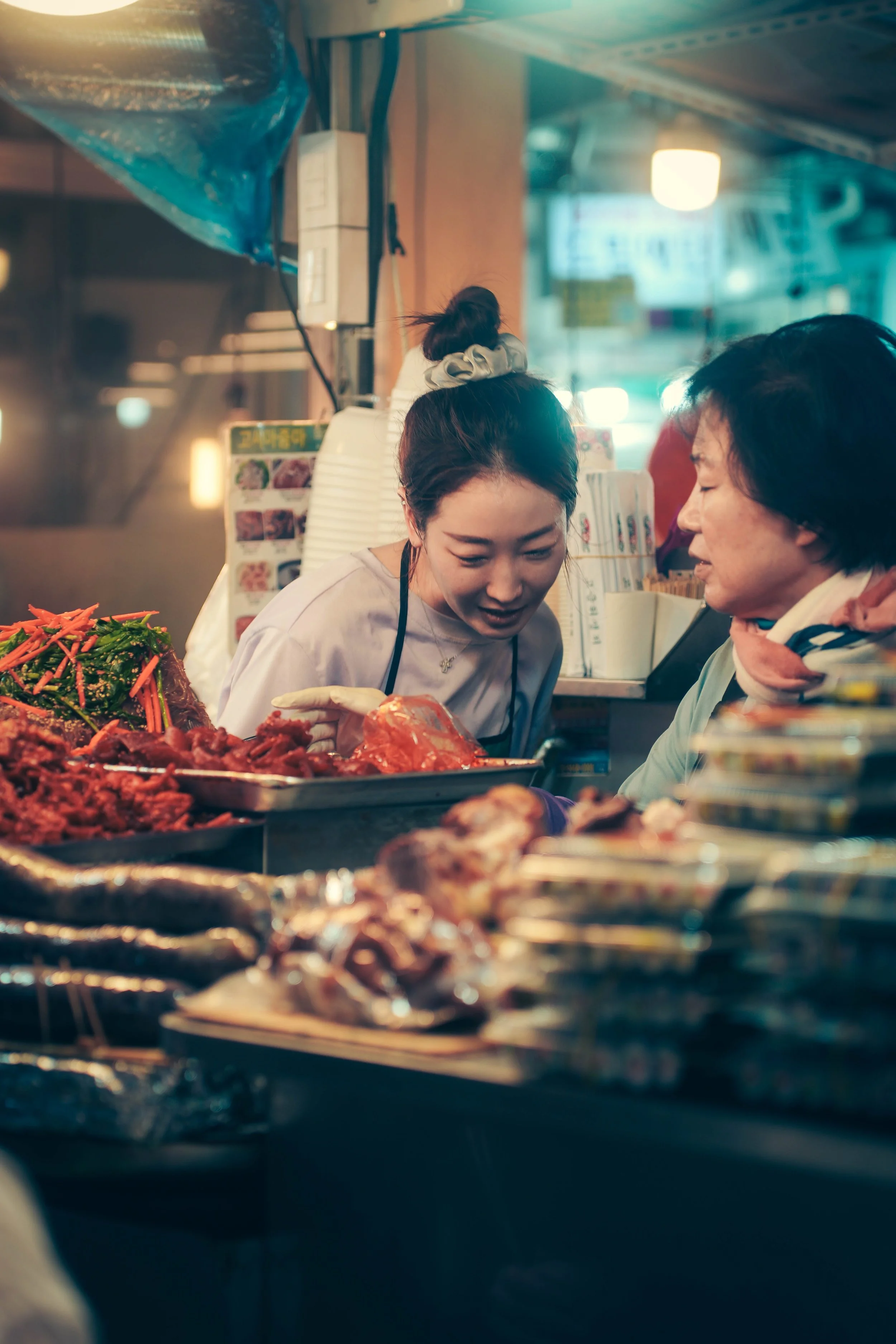
There's a market stall in Ushtobe where an old woman sells Korean food every day. Spicy carrot salad mostly. She makes it in huge batches at home and brings it to the train station in plastic containers. Her parents arrived here on cattle trains in 1937. She was born in Kazakhstan and has never seen Korea. About 500,000 Koreans live across the former Soviet Union today. Most are in Kazakhstan and Uzbekistan with smaller numbers in Russia and Kyrgyzstan. They're called Koryo-saram, which just means "Koryo people" in Korean. The word Koryo comes from the old Goryeo Dynasty that Korea gets its name from. Walk through Almaty or Tashkent and you'll find Korean restaurants everywhere. The food they serve looks nothing like what you'd eat in Seoul or Busan. This is Soviet Korean food. Created in exile and unknown in the actual Korean peninsula.

The Cattle Trains
Koreans started moving to the Russian Far East in the 1860s to escape famine. More came in the early 1900s fleeing Japanese colonial oppression. By 1937 about 172,000 Koreans were living in Primorsky Krai near Vladivostok. Then Stalin got nervous. Japan had just invaded China and was skirmishing with Soviet forces along the Manchurian border. Stalin decided every Korean in the Far East was a potential Japanese spy. Didn't matter that they'd fled Japanese rule. Didn't matter that they were Soviet citizens. Their ethnicity alone made them suspicious.
The deportation order came in August 1937. NKVD agents showed up at Korean homes with thirty minutes notice. Grab your things and get on the train. That's it. No explanation of where they were going or why. They packed 172,000 people onto around 124 cattle trains. The journey took a month. Maybe 25 people crammed into each wagon meant for livestock. No toilets. Barely any food or water. When someone died the body got thrown out at the next stop. Nobody knew if the dead were buried or just left beside the tracks. Koreans believe unburied dead wander the earth. The trains became known as Ghost Trains. Between approximately 16,500 and 50,000 people died during deportation and the first winters in Central Asia. Some estimates go as high as around 40,000 dead from the journey alone. Most were children and elderly who couldn't handle the cold and starvation. The trains dumped them in northern Uzbekistan and southern Kazakhstan. Empty steppe. No housing. No tools. The Soviets promised monetary assistance that never came. They were told to start growing rice in the desert.
Building Something From Nothing
The first winter was the worst. Koreans dug holes in the ground to live in. Earth dugouts barely deep enough to escape the wind. Some Kazakhs helped despite government orders not to. They brought food, helped dig shelters and hosted Korean families through those brutal first winters. Koreans were rice farmers and fishermen from the coast. Now they were stuck in an arid desert being told to farm. They had to build irrigation systems from scratch. Dig canals. Figure out how to make rice grow where it shouldn't.
Within three years they'd done it. Recovered their standard of living through sheer work. The Soviet government gave medals to Koreans who succeeded at collective farming. More than 100 Koreans in Kazakhstan and Uzbekistan became Heroes of Socialist Labor. One was Kim Pen-Hwa, chairman of a collective farm. Another was Hwan Man Kim, from the Uzbek Communist Party. A farmer named Lyubov Li also got the title.
When Germany invaded in 1941 Koreans were initially restricted from frontline service but later got drafted into the Red Army and sent to fight. Captain Aleksandr Pavlovich Min became a Hero of the Soviet Union, the country's highest honor. Thousands of Koreans died fighting for a country that had just deported them.
By the 1970s Koreans had one of the highest education rates in the Soviet Union. The number with college degrees was double the general population. They became doctors, engineers, economists and professors. Got elected to Soviet and Central Asian parliaments. Some became generals in the Soviet army. But their success came at a price. To get ahead you had to be Russian. Speak Russian. Act Russian. Forget you were Korean.
The Food That Survived Everything
Morkovcha is what everyone calls it. Korean carrot salad. It shows up at every market across the former Soviet Union. Thin strips of carrot marinated in vinegar, oil, garlic and spices. Spicy and crunchy and nothing like anything they eat in Korea.
Koreans in Central Asia created it because they couldn't get napa cabbage for kimchi. Cabbage didn't grow well in the desert and nobody was importing it from anywhere. But carrots? Carrots grew everywhere. So they julienned carrots thin like they would have done with cabbage and marinated them with whatever spices were available.
The spices came from Central Asian cuisine. Coriander seeds particularly. Sometimes cilantro. Mixed with Korean hot peppers and Russian vinegar and oil. The result was something completely new. Not Korean and not Central Asian but both.
The dish spread beyond the Korean community fast. Russians loved it. Uzbeks loved it. By the 1960s when Koreans started moving around the Soviet Union for work and study morkovcha went with them. Now you can buy it in grocery stores from Moscow to Bishkek. Pre-made spice mixes exist just for making morkovcha at home.
Korean restaurants exist throughout Kazakhstan and Uzbekistan but the food is distinctly Koryo-saram. It's not what you'd eat in Seoul. Dishes got adapted to Soviet ingredients and Central Asian tastes over generations. This created a unique diaspora cuisine that only exists in this part of the world. You can find Korean food vendors at train stations and bazaars. Old women who learned recipes from their mothers sell homemade Korean dishes in plastic containers. Osh Bazaar is such a place where you can find traditional Korean salads. The food connects them to something their grandparents brought from the Far East even if they've never been to Korea themselves.
The Language That Disappeared
Korean got banned in schools in 1939. Until then Korean kids could learn their subjects in Korean language. After 1939 Korean was only offered as a second language option like learning French or German. By 1945 it wasn't taught at all. This destroyed the language across an entire generation. Kids grew up speaking Russian at school and Russian at home because their parents wanted them to succeed. Speaking Korean became something old people did in private.
By 1989 more Koryo-saram spoke Russian as their native language than spoke Korean. The shift had completed. Korean became a heritage language that most people under 40 couldn't speak. Today maybe only 10 or 15 percent of Koryo-saram can speak Korean at all. Most of them are elderly. The dialects they speak are northern Korean dialects from the 1800s that evolved in isolation in the Russian Far East. Some linguistic features don't exist in modern Korean anymore.
The Koryo Ilbo newspaper published in Korean and Russian since 1923. It used to be based in Vladivostok but got deported to Kazakhstan along with everyone else in 1937. It still publishes weekly in Almaty but circulation is tiny. Most subscribers are old. In another generation there probably won't be enough Korean speakers left to justify printing it.
South Korea established cultural centers in Central Asia after the Soviet collapse. The Korean Centre of Education opened in Bishkek in 2001. These places teach modern Korean to young Koryo-saram who want to connect with their heritage. But modern Seoul Korean is very different from what their great-grandparents spoke. The gap is massive. What survived instead was Russian. Koryo-saram are fluent Russian speakers. Many also speak Uzbek or Kazakh depending on where they live. But Korean? That's gone for most of them.
Where They Live Today
Kazakhstan got about 100,000 Koreans in 1937. Uzbekistan got about 74,000. The numbers have stayed relatively stable unlike other deported groups. Germans and other Europeans left for their ancestral homelands after the Soviet collapse but South Korea never had a return program. Census data shows 99,700 Koreans in Kazakhstan in 1999. Around 173,000 in Uzbekistan by 2013. Kyrgyzstan has about 17,000 Koreans with the majority living in Bishkek. Another 176,000 in Russia though many of those are more recent arrivals. Smaller numbers in Turkmenistan and Ukraine.
Almaty was the cultural center for decades. The Koryo Ilbo newspaper was there. The Korean Theatre of Kazakhstan was there. Founded originally in Vladivostok in 1932 it got deported along with everyone else. The theater performed plays in Korean but the Soviet government controlled content strictly. Only ten percent could reference Korean culture. The rest had to be Russian or Soviet plays.
About 85 percent of Koreans in Kazakhstan now live in cities. That's way higher than the general population at 43 percent. Urban life means more mixing with other ethnicities and faster cultural assimilation. Ushtobe in southern Kazakhstan used to be heavily Korean. The first deportees settled there. Until a few decades ago nine out of ten students were Korean. Now it's reversed. One out of ten. Most Koreans moved to big cities like Almaty and Astana for better jobs and education.
In Uzbekistan Koreans are more scattered in rural areas. This created problems after independence because Koryo-saram spoke Russian but not Uzbek. When Uzbekistan made Uzbek the official language many Koreans lost their jobs. Some moved to Russia but found life difficult there too. The younger generation has been learning Uzbek to survive. Tashkent has a Korean neighborhood where signs appear in Russian and Korean. Korean grocery stores sell ingredients you can't find anywhere else. There's a Korean park with traditional architecture. These spaces keep some cultural connection alive even as the language fades.
What remains is complicated. The Koryo-saram built successful lives in places they never chose, speaking a language that wasn't theirs, practicing traditions that evolved in isolation. They're Central Asian now, even if the rest of the world doesn't know they exist. The question isn't whether they'll preserve Korean culture as it was in 1937—that's already gone. The question is whether they'll be remembered as part of Korean history at all.