Plov in Central Asia: How One Dish Reveals Many Cultures
The first time you see plov you might think it's pretty straightforward. Rice with carrots, onions, meat and oil. Then you travel around Central Asia and realize every single place makes it completely differently. Same basic stuff, totally different results.
It's basically like reading a map through food. Each version tells you about the people making it, where they live and what matters in their daily life.
Why Everyone Cares So Much
Not many dishes carry the weight plov does here. Families go all out making it for the biggest life moments. Weddings, someone having a baby, funerals, religious holidays, national stuff. The dish shows up when things matter most.
Making plov often turns into its own event. Men gather around these massive cast-iron pots called kazans, stirring everything with long wooden paddles. Women handle side dishes and figure out how to feed dozens or sometimes hundreds of people. The whole thing reinforces relationships and keeps traditions going.
But it's not just ceremonial. There's also fierce pride about whose version is best. People throughout Central Asia will argue passionately about which city or region does it right. Sounds lighthearted from the outside but it goes deep.

Uzbek Plov Sets the Standard
Uzbekistan gets widely viewed as the plov heartland. The relationship between this country and this dish runs incredibly deep. Tashkent has a famous Plov Center where cooks make massive amounts in kazans, serving thousands of portions daily. UNESCO even added Uzbek plov-making to its Intangible Cultural Heritage list back in 2016.
What really sets Uzbek plov apart is how structured the cooking gets. There's a specific order cooks follow religiously.
Heat tons of oil until it shimmers. Brown big meat chunks until they're deeply caramelized. Throw in thickly sliced onions until they go translucent. Add julienned carrots cut into long strips. Make what's called zirvak, this rich base of meat, vegetables, spices and oil that creates the whole flavor foundation. Only when the zirvak is perfect do they add rice, layering it carefully on top without stirring. Rice steams through the zirvak and absorbs everything below.
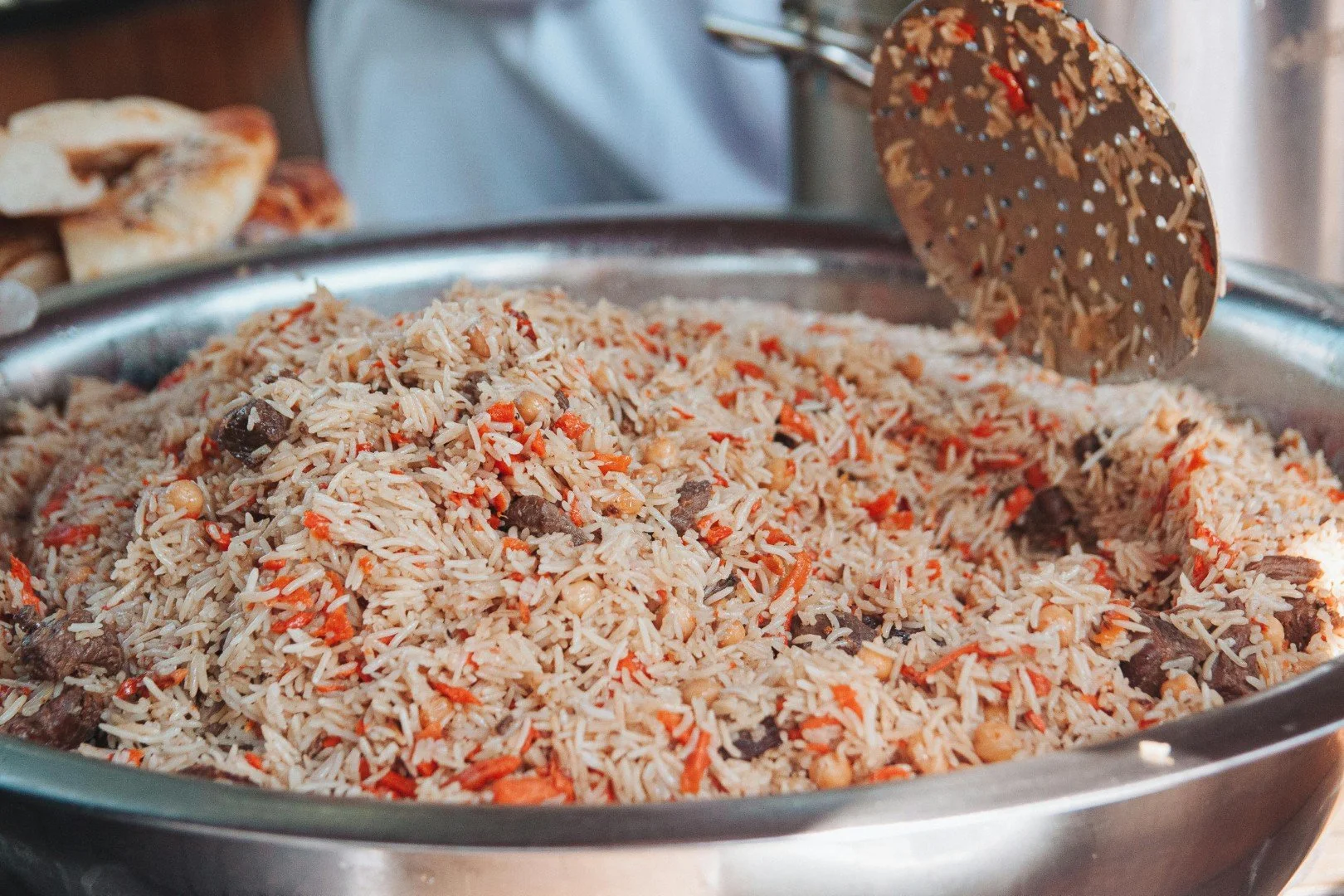
This layering technique gives Uzbek plov its texture. Firm grains that stay separate, never clumping or going mushy. Each grain is distinct, coated in golden oil and full of that caramelized meat and vegetable flavor. Long carrot strips add sweetness and look beautiful. Spices like cumin, coriander seeds and black peppercorns layer in the aromatics.
Uzbekistan isn't uniform about this though. Each region does its own thing.
Fergana plov comes out oily and rich, traditionally using devzira rice. Meat gets cut smaller here. When it's done everything gets mixed together instead of keeping meat separate. The intensity comes from how caramelized everything gets plus the richness of devzira rice swimming in all that oil.
Tashkent plov is lighter and more balanced. Less oil, more focus on how the spices smell. Cumin and black pepper get emphasized. Day-to-day Tashkent plov gets mixed when served, not layered like Samarkand style.
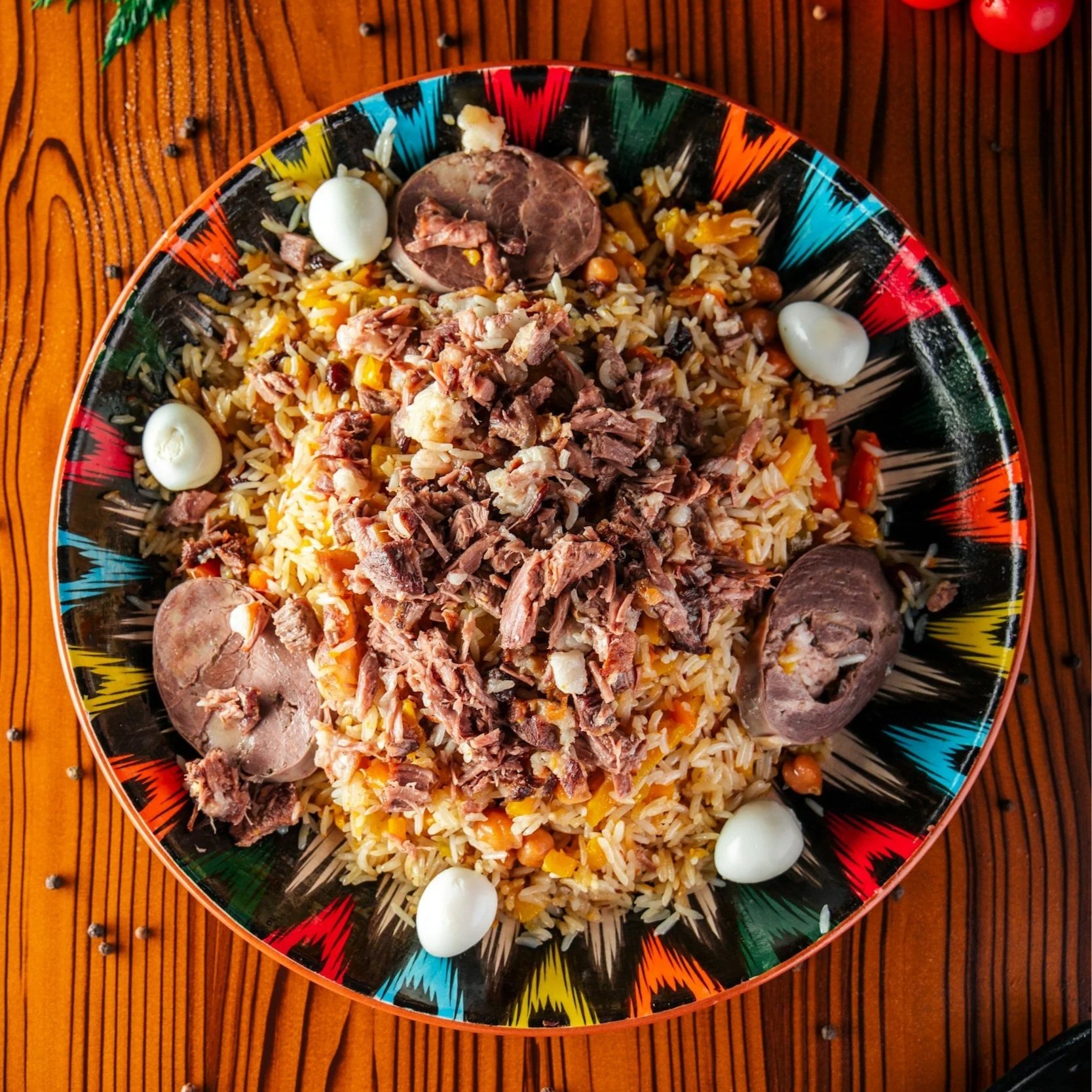
Tashkent's particularly famous for wedding plov called tuy oshi. Festive versions use long-grain laser rice, yellow carrots, chickpeas and sometimes raisins or other dried fruit. Some cooks add horse sausage slices or quail eggs. Different ingredients mean different things symbolically. Raisins supposedly bring sweetness to married life, chickpeas mean abundance, pomegranate brings blessings and barberries when they're used signal health. There's even this saying that wedding plov quality predicts how the marriage will go.
Samarkand plov stands out for presentation. Cooks build these visible layers in the kazan. Meat on bottom, carrots in the middle, rice on top. Everything stays separate during cooking. When they serve it the layers stay distinct too. Rice first on the platter, then carrots, then meat arranged on top. Sometimes garnished with quail eggs if it's fancy. The presentation alone makes it memorable.

Tajik Plov Changes By Region
Tajikistan's plov varies wildly depending where you are. Makes sense given the contrast between fertile lowlands and these isolated mountain valleys.
Northern Sughd region ties deeply to Fergana Valley traditions. Yellow Fergana carrots for sweetness, firm long-grain rice, heavy on the cumin and black pepper. Dushanbe's version tastes more like what you'd expect from a capital. Lighter, cleaner, slightly more modern with moderate oil and restrained spices showing all those mixed influences.
West around Panjakent in the Zarafshan Valley, cooks edge closer to Samarkand technique. The dish stays gently layered and they often use lamb ribs instead of chunks.
Southern Khatlon region becomes richer and more rustic. Lots of oil, caramelized carrots, lamb still on the bone adding depth. Garlic bulbs, chickpeas and heavy cumin give Khatlon plov its hearty character.
Head east to the Pamirs though and everything transforms. Altitude, food shortages and what grows locally create this minimalist practical version. Shorter-grain local rice, not many carrots, simple seasoning that's mostly salt and a bit of cumin. Reflects how mountain life works where food sustains you rather than trying to impress anyone.

Kazakh Plov Comes From Nomadic Life
How Kazakhstan approaches plov reflects deep nomadic heritage and what steppe life required. Kazakhs lived as herders for centuries, migrating across huge territories looking for grazing land. Their food had to provide serious energy for hard physical work in harsh climates.
Kazakh plov shows these values clearly. Tends richer, more robust, more straightforward than refined Uzbek versions. Cooks use large pieces of lamb or beef, often untrimmed, along with bones for flavor. Fat gets kept intentionally for calories, flavor and sustenance. Deep meaty flavors and powerful aroma that completely fills a yurt.
Kazakh plov is way less formal and more improvisational than Uzbek plov. Techniques stay flexible and intuitive. Cooks mix ingredients instead of maintaining careful layers. Reflects core Kazakh values around practicality, flavor and adapting to what you've got.
Kyrgyz Plov: Two Different Worlds
Kyrgyzstan sits at this interesting crossroads between nomadic steppe cultures up north and settled agricultural societies down south. You can see this perfectly in how plov changes by region.
Northern Kyrgyzstan, especially around Bishkek and Issyk-Kul, makes plov that resembles the Kazakh version pretty closely. Hearty, oily, rustic. Creating dishes that provide warmth and energy for cold mountain weather. Nomadic influence stays strong and the food shows it.
Travel south to ancient Osh city in the Fergana Valley though and plov transforms completely. Southern Kyrgyz plov gets more refined, more structured, way more technically demanding. Closely resembles those celebrated Uzbek styles. Not coincidental either. Osh sits right in the Fergana Valley heart, the historic center of Central Asian plov culture. Centuries of trade, migration and cultural exchange along the Silk Road shaped how people cook there.
Worth knowing that Osh's population is predominantly Uzbek, not Kyrgyz. That explains a lot about why the plov style aligns so closely with Uzbek traditions.
Southern plov from Osh is famous across the whole region for intense cumin flavor, use of yellow carrots and perfectly firm rice. Lots of travelers and locals claim passionately that Osh makes the absolute best plov in all of Central Asia. Large family gatherings in southern Kyrgyzstan often center around a massive kazan of plov cooked outside, surrounded by snow-capped mountains.
Turkmen Plov: Desert Living Shaped This
Turkmenistan, the most isolated and least visited Central Asian country, does its own thing with plov. The dish carries clear influence from harsh Karakum Desert conditions and historically needing to preserve and transport food across vast dry landscapes.
Here's where it gets interesting based on what people actually experience eating there. Some sources describe Turkmen plov as super fatty and oily. But travelers who've actually eaten it report something different. The plov can be quite light, actually less oily than neighboring Uzbekistan. Might vary between what gets served to tourists versus everyday versions or just regional differences within Turkmenistan itself.
What distinguishes Turkmen plov is how often dried fruits show up. Raisins, dried apricots, dried plums, sometimes dried quince. These were historically essential for surviving in desert regions where fresh produce was scarce. Today they stick around as a beloved tradition, adding sweetness, complexity and visual appeal.
Results in plov that tastes noticeably sweeter than neighboring countries' versions. Natural sugars in dried fruit caramelize while cooking, creating these flavor layers that complement the savory stuff. Western areas favor more dried fruit and sweetness while eastern regions emphasize richer meat flavors.
How One Thing Became So Many Things
Plov shares common roots across Central Asia but evolved into really different forms for a bunch of connected reasons.
Climate and geography shaped everything. Mountain communities needed dishes providing warmth. Desert communities relied heavily on dried foods. Steppe nomads created portable energy-dense versions they could make anywhere. Rich soil areas like Fergana grew sweeter yellow carrots and more aromatic rice. Places with limited agriculture just adapted recipes to whatever was available.
History left its mark too. Persian culinary traditions brought access to fruits and spices in Tajikistan, Turkmenistan and Uzbekistan. Turkic and Mongol nomadic traditions shaped Kazakh and Kyrgyz cooking with emphasis on practicality and hearty preparations. Chinese influences touched eastern regions. Russian colonization later affected urban cooking throughout the region, especially in Kazakhstan.
How people lived mattered. Settled agricultural communities could develop complex time-intensive techniques and invest in specialized equipment like massive kazans. Nomadic peoples needed meals that were practical, portable and quick to prepare with minimal equipment. Urban centers became places for culinary innovation and competition. Rural areas kept older simpler traditions alive.
These forces turned plov into way more than just a recipe. It became a cultural mirror. Each variation represents a distinct identity, specific history and particular way of seeing the world.
Everyone Fights About Whose Is Best
Across Central Asia from Pamir Mountains to Kazakh steppe, from Karakum Desert to Fergana Valley, plov sparks endless debates. Every country firmly believes its method produces the best plov. Every city claims superiority. Every family swears their grandmother's technique is the only authentic one.
But these arguments, fierce as they get, actually reveal something pretty beautiful about Central Asian culture. Even with wildly different techniques, ingredients, textures and flavors, plov still fundamentally connects people across borders, languages and ethnic identities. Gathering around a huge platter of steaming rice transcends all the regional differences.
Whether you're in a mountain village in Tajikistan, a yurt on the Kazakh steppe or a busy restaurant in Samarkand, plov smell signals the same things everywhere. Welcome, warmth, generosity, community, respect.
Plov ends up doing way more than just feeding people. It tells stories about who they are, where they came from, what they value and how they see their place in the world. History, geography, culture and identity all sitting there on a single platter.