How Music Reveals Central Asia

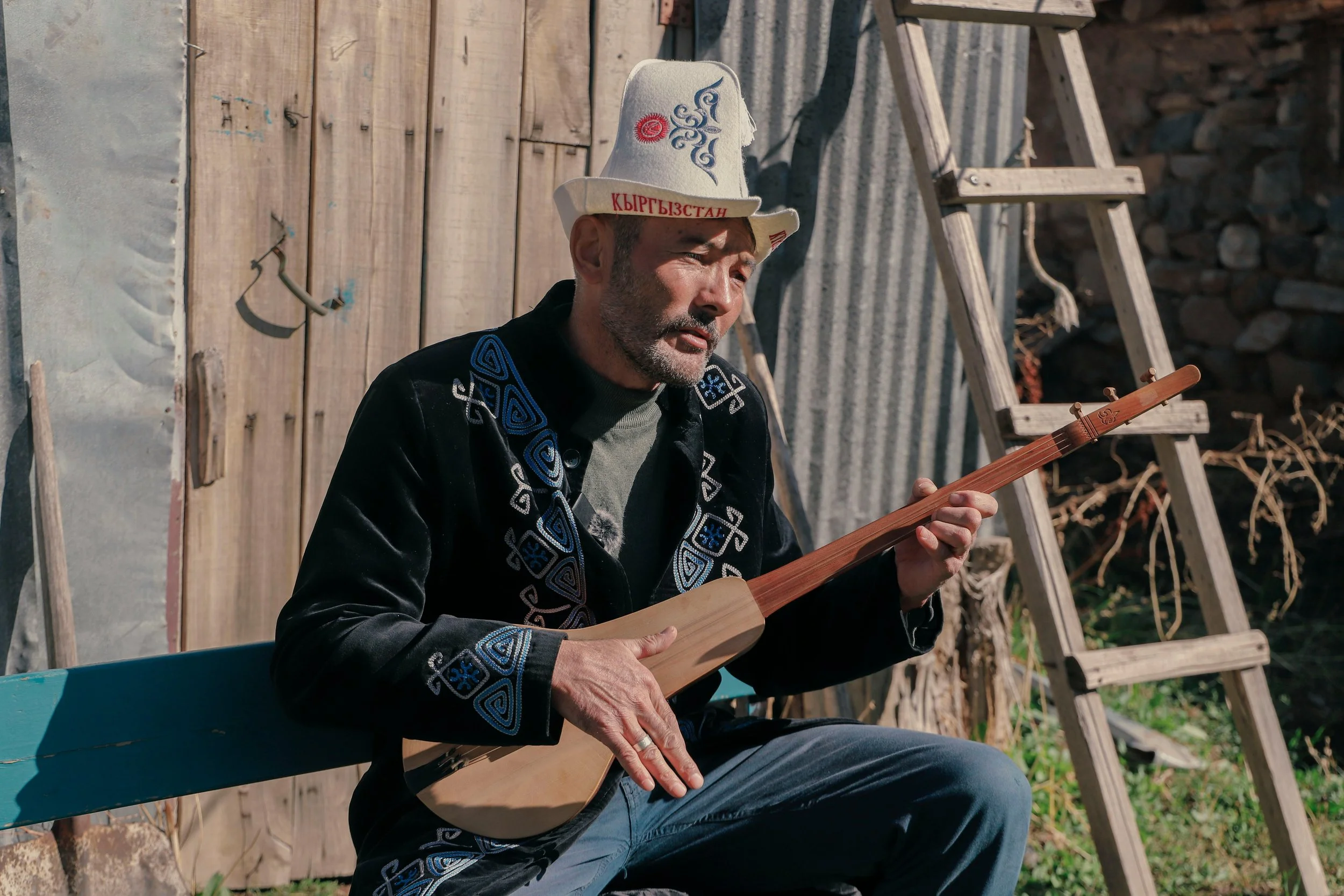
You're sitting around a fire somewhere in rural Kyrgyzstan and someone pulls out a small three-stringed instrument, holds it against their chest and starts playing. The sound is thin and resonant at the same time. Melancholic in a way that doesn't feel performed. Like the landscape made an instrument of itself and someone figured out how to play it.
That's a komuz. And if you were in Kazakhstan the instrument would be different. Different shape, different strings, different sound. Same fire, same steppe, completely different musical tradition sitting right next to it.
Central Asia is one of those regions where the instrument someone plays tells you immediately where they're from and what kind of life shaped their culture. The nomadic Kyrgyz and Kazakhs developed different instruments than the settled Uzbeks and Tajiks, and those differences aren't incidental. They come directly from how each group lived and what music needed to do for them.
What Three Strings Can Do
The Kyrgyz komuz is one of the oldest instruments in Central Asia. Three strings, traditionally made from animal gut (though modern instruments often use nylon), a small pear-shaped body carved from a single piece of apricot or juniper wood. No frets. The player stops the strings with their fingernails rather than fingertips, which produces a tone with an edge to it that fretted instruments don't have.
It's small enough to carry on horseback. That's not a coincidence. Nomadic culture needed instruments that traveled and the komuz fits inside a saddlebag without drama. Everything about its design reflects a life spent moving.
The playing style is percussive as well as melodic. Players tap the body of the instrument between notes, use the strings rhythmically, layer sounds in ways that make one instrument sound like several things happening at once. Kyrgyz musicians who really know the komuz produce something that doesn't resolve into a single category. Not quite what Western ears expect from a stringed instrument.
Komuz players historically were called akyns, poet-musicians who carried oral tradition in their music. Epic poems, historical narratives, social commentary. The Manas epic, a Kyrgyz oral poem whose length varies widely between reciters but is roughly twenty times longer than the Iliad in many versions, was performed to komuz accompaniment. The instrument wasn't entertainment in a casual sense. It was memory storage for a culture without widespread literacy. The music and the meaning were the same thing.
Kazakhstan's Dombra
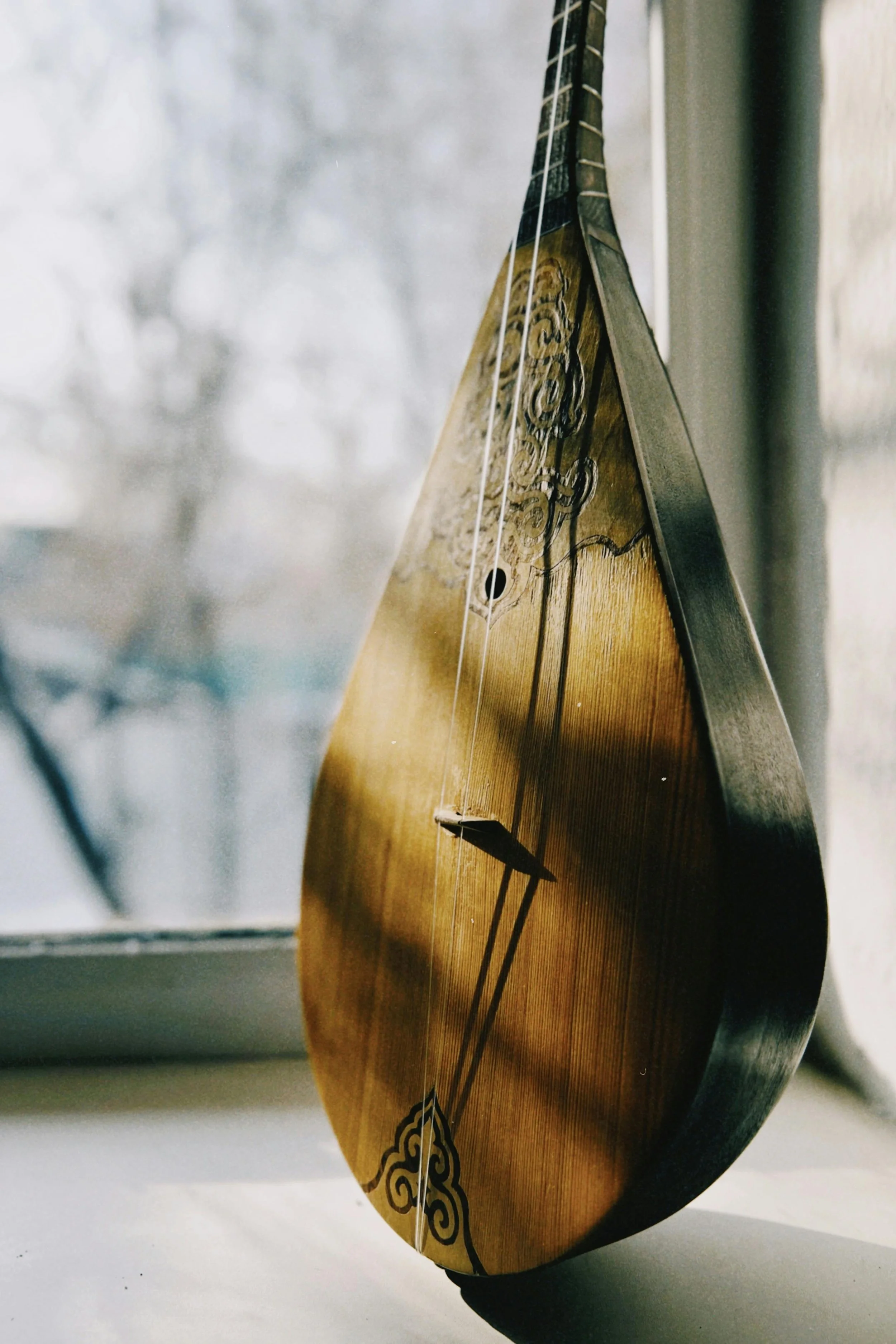
Walk into any Kazakh home and there's a reasonable chance a dombra is hanging on the wall. Two strings (some modern or western styles use three), a long thin neck, a teardrop-shaped body. Played with a strumming technique that produces a bright percussive sound quite different from the komuz's more nasal resonance.
The dombra is to Kazakh culture what the komuz is to Kyrgyz. Central. The instrument Kazakh akyns used to carry oral tradition across the steppe. The thing you learned to play if you were serious about your cultural identity. When the Soviet Union tried to formalize and control Kazakh musical traditions it did so partly by standardizing the dombra, producing orchestras of them in different sizes, treating it as a national instrument in a way that was both recognition and attempted co-option.
The strumming style varies significantly by region. Western Kazakh dombra playing sounds different from eastern Kazakh playing in ways that Kazakhs identify immediately and outsiders take time to hear. The instrument absorbed regional variation across a country the size of Western Europe and different traditions developed in relative isolation across that distance.
Dombra music often mimics sounds from the natural world. Specific pieces represent horses galloping, wind across steppe, the sounds of specific animals. This isn't metaphorical. Skilled dombra players are doing something closer to imitation, using the percussive strumming to reproduce rhythms and sounds from the environment the music grew up inside.
The Dutar and the Settled South
Cross from Kyrgyzstan or Kazakhstan down into Uzbekistan and Tajikistan and the musical tradition shifts completely. The dutar is the instrument of the settled Silk Road cultures and it sounds and looks different from both the komuz and dombra in ways that reflect a completely different way of living.
Two strings, a long neck, a large round body. Played with fingerpicking rather than strumming, which produces a softer, more melodic sound. The dutar belongs to the same family as Persian classical instruments and that connection is audible. Where the komuz and dombra have a steppe openness to them, the dutar sounds like interior spaces. Like music made for rooms rather than open sky.
Uzbek and Tajik classical music built around the dutar developed into a sophisticated formal tradition called Shashmaqam, six complex modal suites with precise rules about composition and performance. This is not folk music in the informal sense. It's a classical system with theoretical underpinnings, specific modes, specific emotional associations attached to each one. The equivalent of a Western classical tradition but rooted in Persian and Central Asian rather than European musical theory.
UNESCO recognized Shashmaqam as intangible cultural heritage in 2003. The tradition nearly collapsed during the Soviet period when it was considered insufficiently proletarian and then got partially rehabilitated later as national heritage. The tension between suppression and state promotion left complicated marks on how the tradition survived and who carries it now.
Small Instrument, Strange Sound.
The khomus is a jaw harp. A small metal or bone frame with a flexible tongue that the player holds against their teeth and plucks while using the mouth cavity as a resonator. Change the shape of your mouth and the overtones shift. The instrument produces a buzzing, almost electronic sound that sits somewhere between music and noise until you attune to it and then it starts resolving into melody.
It's one of the oldest instrument types on earth. Versions of it appear in cultures across Asia and into Eastern Europe with no clear single point of origin. In Central Asia it had some historical connections to shamanic traditions, but it was also widely used as a secular instrument in many areas.
Kyrgyz khomus playing has experienced genuine revival in recent decades. Young musicians have picked it up not as folk tradition preservation but as a genuinely interesting instrument with sonic possibilities that fit into contemporary experimental music. There are khomus players now who combine it with electronics, with throat singing, with other instruments in ways that have nothing to do with traditional ritual context and everything to do with what the sound can do.
The instrument is small enough to carry in a pocket. Which historically mattered for the same reasons the komuz's portability mattered. You take what you can carry.
The Sato and What It Connects
The sato is less well known outside the region than the other instruments here and that's partly because it sits in an interesting in-between position. A bowed instrument with a long neck and a skin-covered resonator, played upright. It appears in Kyrgyz and Tajik traditions and the playing style and construction differs enough between them that some researchers treat them as related but distinct instruments.
The bowing technique produces a sound with a vocal quality to it, something between a stringed instrument and a human voice. This wasn't accidental. The sato was used in some healing ceremonies and ritual contexts where the instrument was understood as speaking rather than just sounding. The line between music and something else was deliberately blurred.
It's rare now. Finding a skilled sato player requires knowing where to look and even then you're often finding someone older who learned from a tradition that has very few practitioners left. The instrument didn't get the same revival attention that the komuz and dombra received through state promotion and national identity projects. It survived in smaller, more specific contexts and is genuinely at risk of disappearing as those contexts shrink.
Throat Singing
Throat singing in Central Asia is connected to the instrumental traditions but separate from them. It's a vocal technique that produces multiple pitches simultaneously, the overtones of the voice isolated and amplified through precise shaping of the mouth, throat and nasal cavity. The result is one person producing what sounds like two or three voices at once.
The technique appears most strongly in Tuvan and Mongolian traditions immediately adjacent to Central Asia and exists in Kyrgyz and Kazakh musical practice too, sometimes combined with komuz or dombra playing. It is less central in Kyrgyz and Kazakh music than in Tuva or Mongolia. The same underlying principle that makes the khomus work, using the body as a resonator to isolate specific overtones, applies to throat singing. The body itself becomes the instrument.
The connection to landscape is something performers talk about consistently. Throat singing developed in environments with specific acoustic qualities, open steppe, mountain valleys, spaces where sound behaves differently than it does in enclosed rooms. The technique is partly about reproducing the sounds of those environments using only the human voice. Wind. Water. The harmonics that appear in natural settings and that nomadic people spent their lives surrounded by.
Why Any of This Matters
The instrument a culture develops tells you what that culture needed music to do.
Kyrgyz and Kazakh nomads needed something portable, percussive, capable of carrying epic oral tradition across vast distances. The komuz and dombra fit those requirements exactly. Uzbek and Tajik settled cultures needed something suited to interior performance, to formal classical systems, to music as sophisticated courtly art. The dutar fit that.
The khomus needed to fit in a pocket and produce sounds useful for ritual. The sato needed a vocal quality for ceremonial contexts where the boundary between music and speech mattered. Every design choice in every instrument connects back to what life actually required of music in that specific context.
When you hear a komuz played well in Kyrgyzstan you're hearing an instrument that evolved over centuries to carry the memory of a nomadic culture that had no other way to store it. When you hear dombra music that mimics horses galloping you're hearing a tradition that grew up so close to horses that reproducing their sound became a natural thing to do with an instrument.
The music isn't separate from the landscape and the life that shaped it. It's a direct product of both. That's why it sounds like nowhere else.