Why Is Eagle Hunting Practiced in Central Asia?
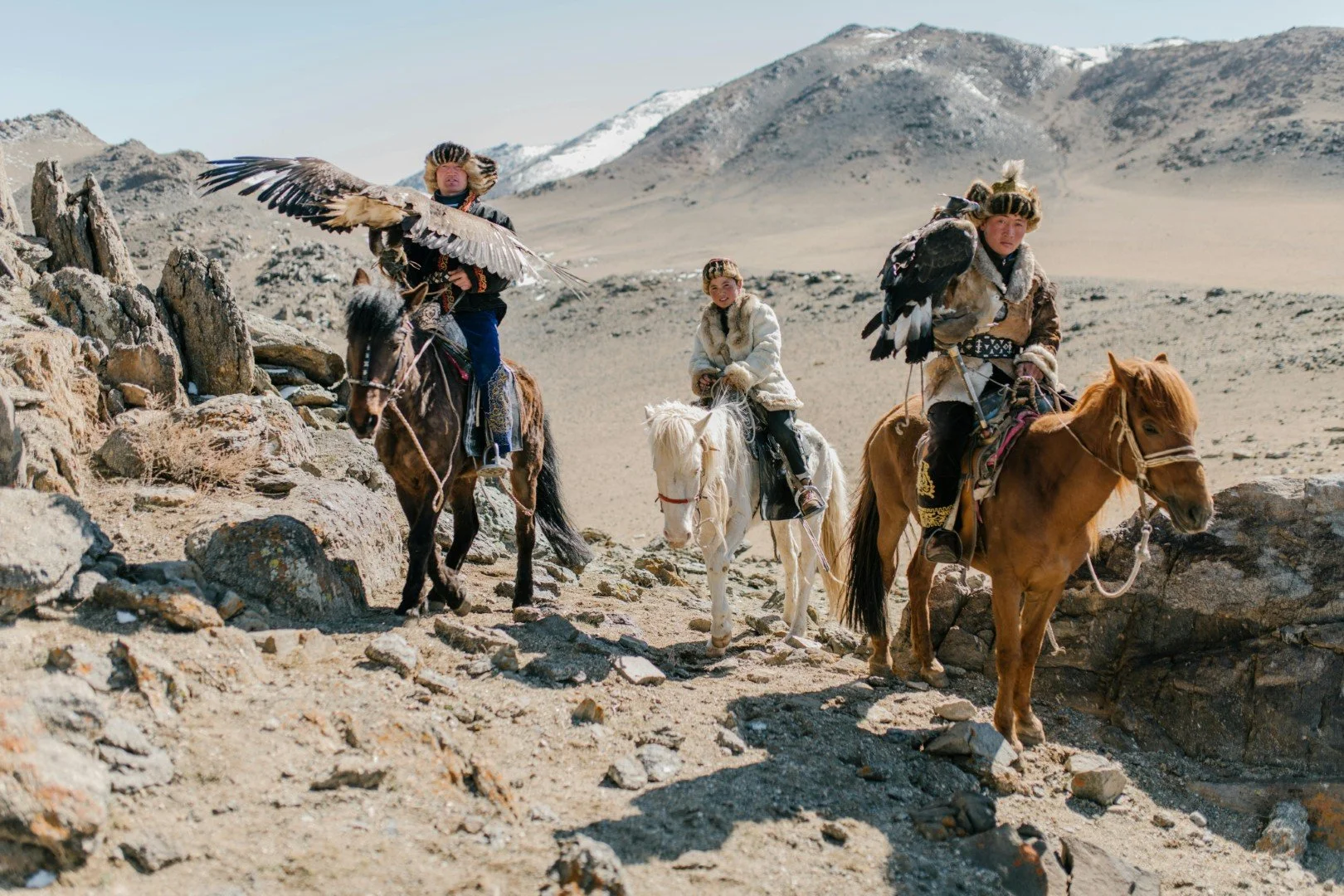
There's this moment when a golden eagle spots prey from a mountain ridge. The bird goes completely still for a couple of seconds. Then it drops off the edge and dives at speeds that feel unreal. Fast enough that the wind itself seems to disappear. When those talons connect, the sound carries across the valley.
Kyrgyz hunters call golden eagles “the bird of God,” and once you see one hunt, you understand why.
Eagle hunting still happens here in the mountains. Real hunting, not just demonstrations for visitors, though those exist too. Actual berkutchi going out in winter with their birds to bring back foxes and hares. In 2024. While most of the world orders dinner through apps.
It Goes Back Further Than You’d Think
Eagle hunting in Central Asia is ancient. Estimates place it at around 4,000 years old, possibly more. The Khitan people practiced it by 936 AD, and they almost certainly inherited the tradition from earlier cultures. Genghis Khan’s armies are documented as using golden eagles. The Mongol Empire expanded across half the known world, and these birds were part of that way of life.
When Kyrgyz nomads came under Mongol rule in 1207, they lost much of their political independence and control over land. But they continued training eagles. That persistence says a lot about how deeply rooted the practice was.
Old Turkic societies used the title kush begi, meaning “lord of birds.” It was reserved for people the khan trusted deeply, advisors rather than entertainers. Eagle hunters held status because their skills directly supported survival.
Winter in these mountains is no joke. Temperatures regularly drop below minus 40 Celsius. Families living in remote valleys needed protein and furs to survive. Hunting with eagles allowed them to secure both in one effort, making every expedition count. The pelts brought down by eagles weren’t just for trade; they provided warm clothing, blankets, and other essentials that helped families get through bitter winters. The animals caught by eagles weren’t only prized for their pelts; they also supplied essential food for families during the harshest months.
A skilled berkutchi working with an experienced eagle could bring in dozens of foxes during a good season, along with other small predators. The hunting season runs from October to February, when fox pelts are thickest and most valuable.
For families cut off from roads and markets, those numbers weren’t impressive. They were essential.

Female Eagles Are Preferred
Kyrgyz hunters will tell you there’s a clear difference between falconry and hunting with golden eagles. Falcons are respected, but golden eagles operate on a different scale entirely.
The bird is called berkut, named for the golden feathers at the back of its head. Female eagles are preferred almost universally because they’re larger and more aggressive. That matters when hunting animals that fight back. A large female can have a wingspan exceeding two meters, powerful enough to subdue prey efficiently. During a dive, speeds can approach 90 miles per hour under the right conditions.
Golden eagles hunt animals far larger than what most birds of prey could handle. Foxes, badgers, sometimes lynx, and on rare occasions young wolves when deep snow slows them down. Larger prey brings greater respect, more food, and better trade value for pelts.
In good conditions, golden eagles can live 30 to 40 years. They’re intelligent enough to distinguish a single human voice from many others, and while they remain independent hunters, they can form a deep bond with one person. That bond, selective and intentional, is what berkutchi spend years building.
Training Takes Over Everything
Becoming an eagle hunter isn’t a casual decision. The commitment shapes daily life for years.
Traditionally, hunters either trap a wild eagle or take a chick from a nest. Both methods are risky and require experience. Adult eagles aggressively defend nests, and serious injuries have been documented among inexperienced climbers. Hunters observe nests for weeks, selecting chicks around three months old, old enough to survive, young enough to bond.
The leather hood is called a tomogo. Young eagles wear it frequently at first to limit distractions and help focus on the handler’s voice. One person feeds the bird, speaks to it, sometimes sings. Always the same person. That consistency is what creates the bond. Over time, the eagle responds only to that individual’s call, even when surrounded by other hunters.
Training typically takes three to four years before the eagle hunts reliably. Early lessons involve chasing fox fur tied to ropes, then live prey like rabbits. Gradually, the bird learns which animals to target and how to hunt efficiently.
The hardest part is consistency. Hunters spend two to three hours daily with their birds, even outside hunting season. Miss too much time and the eagle quickly reverts to independence. The bond fades.
This demand is one reason the tradition nearly disappeared during the Soviet era. Forced settlement and collective labor made that level of daily commitment almost impossible. Many berkutchi stopped entirely, and knowledge that had passed from father to son for generations nearly vanished in a single lifetime.

What Happens on a Hunt
Traditional hunts happen on horseback. The horse itself needs special training and is sometimes referred to locally as a berkut at. A device called a baldak attaches to the saddle to support the hunter’s arm. This is necessary when carrying a large eagle for hours.
Hunters often work with a Taigan, the traditional Kyrgyz hunting dog bred for speed and endurance. The eagle rides hooded until prey is spotted. Once the hood comes off, the bird locks on.
Eagle eyesight is remarkable. Under good conditions, they can detect movement from several kilometers away. After the strike, a trained eagle waits rather than feeding immediately. The hunter arrives, rewards the bird, and takes the remaining meat and pelt.
Experienced hunters train their eagles to kill efficiently without damaging the fur, preserving its value. That level of control reflects years of shared experience rather than dominance.
Why Does This Still Exist?
Most villages no longer rely on eagle hunting to survive winter. Stores, roads, and markets exist now. But in the most remote valleys, places cut off for months by snow, eagles still provide food and supplemental income.
More importantly, eagle hunting connects people directly to their ancestors. It’s a rite of passage in some families, a visible line of continuity across generations. The relationship represents something increasingly rare. A working partnership with a wild animal based on trust rather than control.
Calling the eagle the “bird of God” isn’t strictly religious. It reflects respect for an apex predator that could easily harm a human but chooses cooperation instead.
Soviet Period Almost Ended It
Collectivization disrupted nomadic life. Private eagle ownership was discouraged, and the daily routines required for training became unworkable. By independence in 1991, only a small number of active berkutchi remained, many of them elderly.
The tradition survived because families in remote regions quietly continued despite pressure. Their persistence is the reason eagle hunting exists at all today.
Tourism Changed the Game
Since independence, efforts have been made to support eagle hunters through cultural tourism. The Salburun Federation works to connect berkutchi with festivals and visitors while maintaining traditional practices.
The World Nomad Games, first held in 2014, include eagle hunting competitions. Bokonbayevo, on the southern shore of Issyk-Kul, has become a center for demonstrations and festivals. Tourism provides income that allows hunters to continue a demanding lifestyle.

They Let Them Go Eventually
After roughly 20 years, hunters release their eagles back into the wild. The moment is ritualized and often emotional. The bird is free to mate and live out its remaining years in the mountains.
Hunters describe these releases as among the hardest moments of their lives. Some say the eagle circles overhead for days, reluctant to leave. That ending is central to how berkutchi understand the relationship. Partnership, not ownership.
Where Things Stand Now
Eagle hunting is slowly declining. Fewer young people can commit the time. Climate change affects prey populations. When experienced hunters die without apprentices, knowledge disappears with them.
Estimates suggest only a few hundred active eagle hunters remain across Central Asia, with fewer than a hundred practicing seriously in Kyrgyzstan.
Still, the tradition adapts. Some young people, including a small number of women, are learning. Tourism and festivals provide incentives. International attention helps.
Like yurts and horse culture, eagle hunting survives because it’s still lived, not displayed. As long as there are harsh winters, remote valleys, and families who value the bond between human and bird, berkutchi will continue riding out with eagles on their arms.
The bird of God still flies here. That matters more than numbers can measure.