The Edible Map: Deciphering Central Asia Through Plov
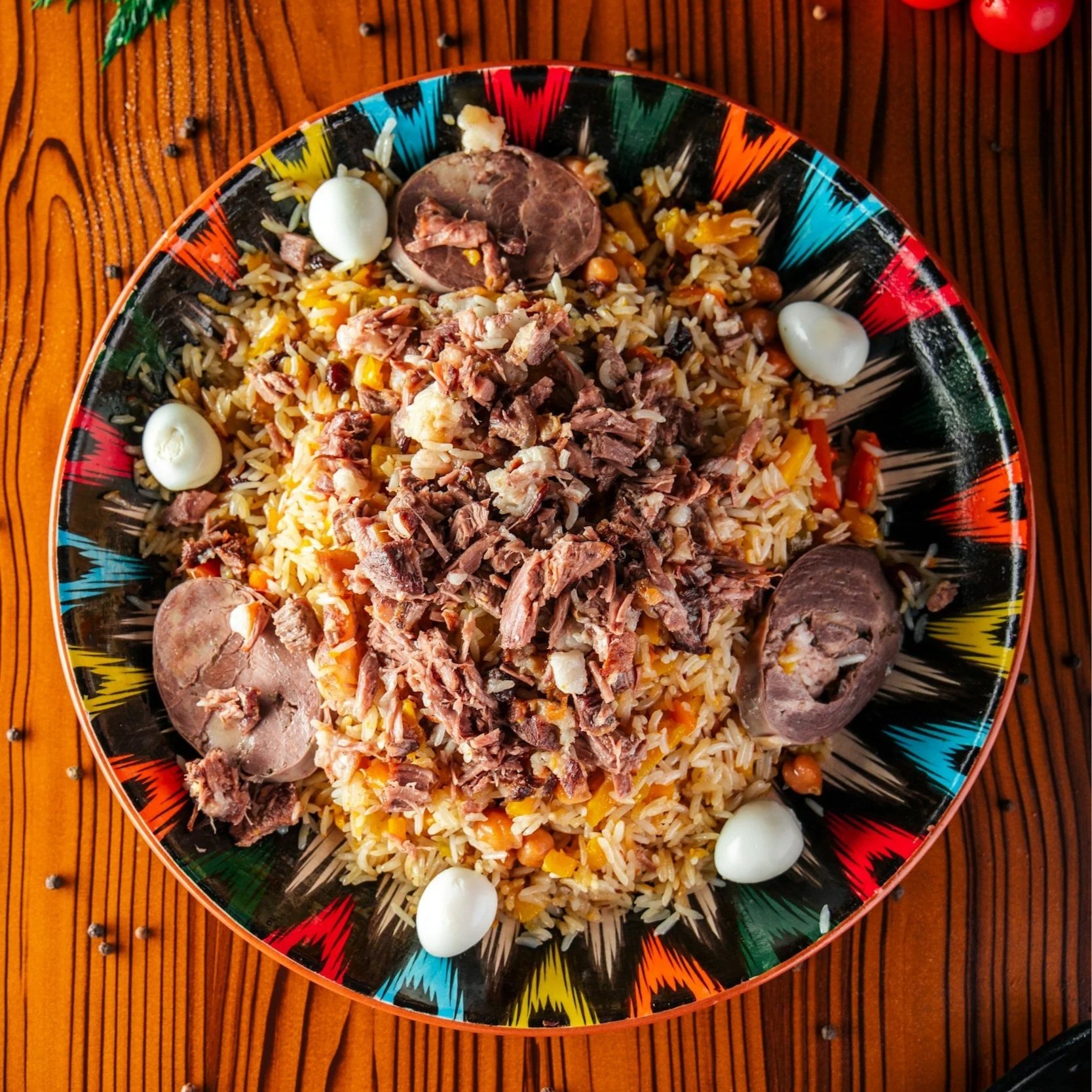
I have spent years traveling the dusty, glorious roads of Central Asia, notebook in hand, trying to capture the evolved complexity of this region. It is a place of ancient empires and modern aspirations, of silence in the high mountains and cacophony in the bazaars. But if you asked me to explain the entire region with just one word, I wouldn't choose a place or a date. I would choose a dish.
Plov.
To the uninitiated Western traveler, plov looks deceptively simple—a staple of rice, carrots, onions and meat. But after a decade of research and countless meals shared with families from the Caspian Sea to the Tian Shan mountains, I have learned that plov is far more than dinner. It is a map.
Traveling with my friends Aigul, Aim and Bermet—the sisters behind Apricot Adventures—has only deepened this obsession. Because they are locals, they don't just order the food; they narrate it. Sitting with them, I’ve learned that every variation of plov reveals a different chapter of Silk Road history.
Here is how to read the region, one plate at a time.
Uzbekistan: The Theatre of Cuisine
If you begin your journey in Uzbekistan, you are starting in the undisputed heartland. In cities like Tashkent and Samarkand, cooking is high drama, and the variations are incredibly specific.
In Tashkent, the capital, the focus is often on the tuy oshi or "wedding plov." It is a celebratory dish that feels lighter and more aromatic than others. Cooks prefer "laser" rice—a long, pearly grain that stays fluffy—and mix in yellow carrots for sweetness, chickpeas for texture and often raisins or barberries. I vividly remember Aigul explaining the symbolism to me over a steaming platter: the chickpeas represent abundance, while the raisins promise a sweet life.
Travel a few hours west to Samarkand, and the engineering changes entirely. Here, the ingredients are famously cooked in distinct layers—meat at the bottom, carrots in the middle and rice on top—and they are never stirred together in the pot. When it is served, it retains this structure: a mound of white rice topped with tender carrots and meat, looking as elegant as the city's blue-tiled architecture.
Kyrgyzstan: A Tale of Two Kitchens
Crossing the border into Kyrgyzstan feels like entering a different world, and the food reflects this immediately. This is the sisters' home turf, and traveling with them reveals a fascinating culinary split.
In the north, near the family’s roots in Issyk Kul and the capital Bishkek, the plov echoes the nomadic spirit of the mountains. It is rustic and robust, often oily and heavy on the meat. It isn't designed for presentation; it is fuel for the shepherd and the rider, crafted to keep you warm against the chill of the high steppe.
But when we travel south to Osh in the Fergana Valley, the script flips. Osh was a major Silk Road trading post, and its plov reflects centuries of settled culture. Here, the locals use devzira rice—a local red grain that is dense, nutty and absorbs flavors like a sponge. The result is a darker, richer dish, perfumed heavily with cumin and cooked with the technical precision of the Uzbek masters next door.
Kazakhstan: The Spirit of the Steppe
To the north, in the vast expanse of Kazakhstan, the plov sheds its formalities entirely. The Kazakhs were historically nomads who moved across immense territories, and their food had to be practical and energy-dense.
When you taste plov here, you taste the pragmatism of the steppe. It is rich, unpretentious and caloric. The meat is often cut into large, untrimmed chunks, sometimes left on the bone to release the marrow, and there is a generous use of fat—historically essential for surviving the harsh winters. Unlike the rigid layering of Samarkand, the Kazakh style is improvisational and intuitive, mixing ingredients freely in the pot. It is the food of survival and strength.
The Hidden Corners: Sweetness and Survival
For the deep-dive traveler, the variations in Turkmenistan and Tajikistan offer rare insights into how geography dictates flavor.
In the deserts of Turkmenistan, fresh produce was historically scarce, so cooks turned to what they could preserve. I was surprised the first time I ate plov here—it was studded with dried apricots and dried plums. The natural sugars caramelize during the slow cook, creating a delightful sweetness that perfectly balances the savory lamb.
Meanwhile, in the high Pamir mountains of Tajikistan, the dish becomes minimalist. At these altitudes, resources are thin. The "Pamiri" plov I tried was sparse—short-grain rice, a little meat, salt and just a whisper of cumin. It wasn't about impressing a guest; it was about honoring the ingredients they had.
The Shared Table
You can certainly eat plov anywhere in Central Asia. It is ubiquitous. But there is a profound difference between eating a meal and understanding it.
This is the joy of exploring the region with the Apricot Adventures team. It’s not just about the logistics of getting from A to B; it’s about the context. It’s Aigul pointing out why the carrots are yellow instead of orange; it’s Aim explaining the history of the red rice in your bowl; it’s Bermet encouraging you to try the horse sausage because it’s a delicacy, not a dare.
When you sit at their table, whether it’s at a celebration for Aigul’s family or a simple lunch on the road, the plov stops being just rice and meat. It becomes a story—one you are now part of.
