A Kyrgyz Wedding: The Ultimate Celebration (And Why I Finally Got to Breathe)

This summer was monumental for the Kubatbekova family. Not just because we threw a massive party, but because my eldest and beloved sister, Aigul, finally married our wonderful zhezde (brother-in-law), John Paul.
For you, this might sound like a happy romantic update. For me and my other sister Aim, it was sweet liberation!
In Kyrgyz culture, there is a widely held superstition that younger siblings shouldn't marry before the oldest, lest they "curse" their own future happiness. So, as respectful younger sisters, we have waited patiently (and perhaps tapped our feet just a little bit) for Aigul’s moment to arrive.
And when it did, we didn't just celebrate. We exploded with joy.
If you have ever wondered what happens at a Kyrgyz wedding—or why we at Apricot Adventures are so obsessed with the concept of "celebration"—let me take you inside the chaos, the tradition and the love of August 25th.

The Blessing: Starting with Bata
Before the music starts or the vodka is poured, everything begins with the Bata.
In our culture, the words of an elder are powerful enough to shape the future. Before the madness of the wedding day, our grandmother gathered us. Everyone stood in silence, palms raised to the sky, as she recited a prayer for harmony and protection. It is a moment of profound grounding. It reminds us that no matter how modern we become, we are held up by the generations before us.
Kyz Uzatuu: The Long Goodbye
A Kyrgyz wedding isn't a one-day affair. It starts with the Kyz Uzatuu, the "giving away" of the bride, hosted by our side of the family.
In the West, a rehearsal dinner might have 20 people. In Kyrgyzstan, a "small" family gathering like this has 100 to 500 guests! It is loud, it is chaotic and it is beautiful. We played traditional games, we sang Kyz Uzatuu yrlary (farewell songs that make even the toughest uncles cry) and we performed the Chachu—scattering sweets and money over the bride to ensure her prosperity.
Between this and the main wedding, there is a quiet, intimate ritual called Soiko Saluu. This is when the groom's mother places earrings on the bride. It’s not just jewelry; it’s a symbol of acceptance. It was the moment I saw Aigul truly transform from just "our sister" to a wife and daughter of a new family.
The Main Event: The Tamada, The Food and The Energy
The wedding itself is hosted by the groom’s side, and in Kyrgyzstan, these are monumental events. Families will save for years (or take out loans!) to ensure the hospitality is flawless.
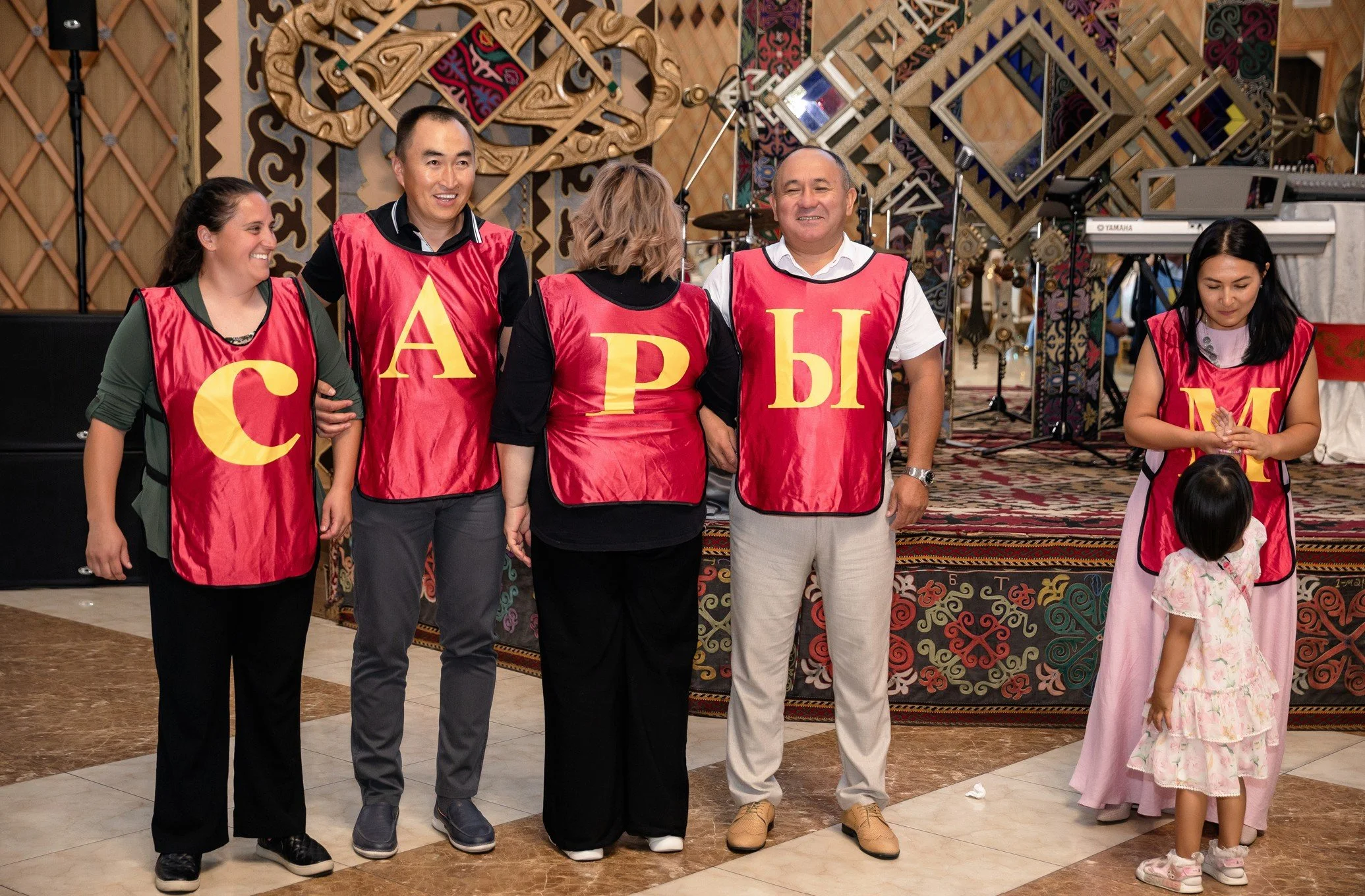
The hero of the night is the Tamada—a professional showman who orchestrates the entire evening. He manages the hundreds of guests, the endless toasts and the games. His job is to ensure the energy never drops.
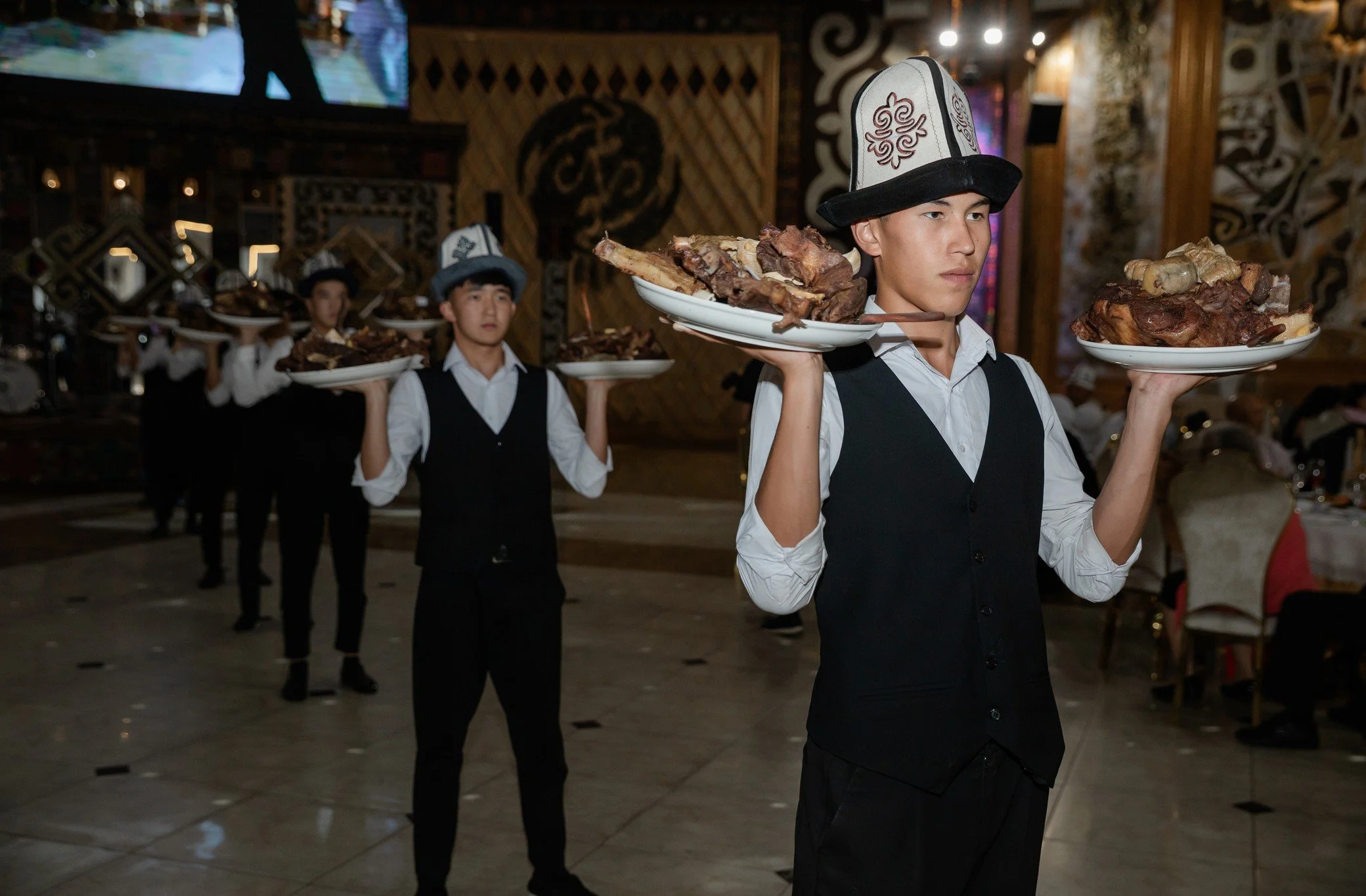
And then, there is the food. Tables groan under the weight of salads, fruits, pastries and fish. But the king of the table is always Beshbarmak (our national dish of noodles and meat). At Aigul’s wedding, we served the traditional horse meat, where specific cuts are given to guests based on their status. The most honored elders received the ucha (hindquarters), the most flavorful and prized cut.
This is actually the secret philosophy behind Apricot Adventures.
When Aigul, Aim and I design a tour for you, we treat it exactly like a Kyrgyz wedding. We don't just want you to visit; we want you to feel like the honored guest at the head of the table. Whether we are serving you a meal in a yurt or guiding you through a mountain pass, we channel that same spirit of radical hospitality. We want to be your Tamada, ensuring your journey is seamless, generous and full of joy.
Dancing Until Dawn
Despite being a majority Muslim country, a Kyrgyz wedding is rarely dry! Toasts are raised every few minutes—to health, to happiness, to parents, to children. And with every toast, the music gets louder.
We danced until our heels blistered. We danced under disco balls until we were out of breath, fueled by the sheer contagious happiness of the room. It is a specific kind of exhaustion that feels like victory.
The Take-Home Blessings
As the night ended, guests didn't just leave with memories; they left with food. We encourage guests to gather sweets, pastries and meat from the tables to take home. This isn't just about leftovers. It is symbolic. It represents taking a piece of the couple's happiness and abundance back to your own home.
A Kyrgyz wedding is loud, exhausting and expensive. But it is also the purest expression of who we are. It is community in action.
And now that Aigul is happily married, Aim and I can finally start planning our own futures! But until then, I’ll be busy planning your next itinerary.
P.S. If you want to experience the chaotic joy of a Kyrgyz wedding without the foot pain or the relatives asking when you are getting married, I’ve curated a playlist of the night’s biggest hits. Put this on, pour a drink and dance like a nomad!